


David Obón, ESDESIGN lecturer, explores the links between architecture, design and biological evolution on Voices from Oxford
David Obón, a lecturer on the Double Master's Degree in Interior Design and Decoration at ESDESIGN, the Higher School of Design of Barcelona, part of Planeta Formación y Universidades, has taken part in a conversation with Professor and biologist Dennis Noble from the University of Oxford, published on 12 May 2026 on the Voices from Oxford channel. The discussion, recorded in January 2026, explores biological evolution, the origins of complexity and the ability of living organisms to learn and adapt.
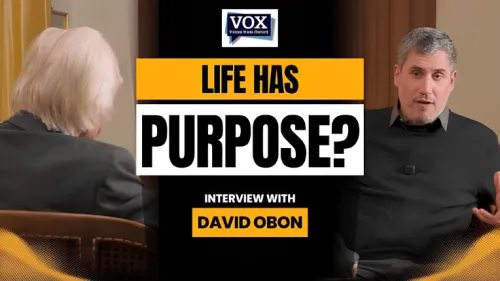
During the conversation, Obón draws connections between his background in architecture and the processes of transformation found in nature. Together, they reflect on the relationship between form and function, putting forward an idea that reinterprets one of the classic principles of architectural design: form enables function. From this perspective, structures can create new possibilities and foster the development of capabilities that did not previously exist.
This reflection is linked to the concept of tinkering, which refers to the reuse and adaptation of existing structures to serve new purposes. This process is common in architecture and can also be observed in biological evolution, where nature makes use of pre-existing forms to develop new functions.
The conversation also opens up a discussion about artificial intelligence and its relationship with creativity and learning. Building on the ideas explored about the ability of living systems to explore, adapt and generate new solutions, the discussion invites us to consider what AI can contribute to the study of these processes and how it is changing our understanding of innovation. This connection broadens the debate on creativity beyond the traditional boundaries between nature, technology and human thought.
David Obón's participation reflects ESDESIGN's commitment to an interdisciplinary approach to design, which finds common ground with other fields of knowledge, such as science and biology. This perspective highlights the value of creative thinking and the ability to understand how existing structures can give rise to new possibilities.
