


Master in Branding and Creative Brand Communication
- October 2026
- 100% online
- English
- 6.500€
- 12 months
- 60 ECTS
Intelligent Branding: merging creativity, AI, and analytical vision to lead strategy in a saturated market
The Online Master’s in Branding, Creativity, and Brand Communication at ESDESIGN is an online lifelong learning programme that enables you to understand, create, and manage brands by going beyond the barriers of traditional design.
The curriculum prepares students to tackle the following key areas:
- Creating Soul Brands: ideation and development of brands with real purpose and social impact.
- Applied Artificial Intelligence in brand conceptualisation and design: mastery of generative AI and brief architecture.
- Consumer Analysis: in-depth study of behaviour through psychology and neuromarketing.
- Technical and Strategic Management: developing visual and conceptual consistency across every brand touchpoint.
- Real-world Problem Solving: continuous learning under the guidance of active experts, featuring professionals such as Guille Ramírez (DDB Spain, formerly Apple and VW) and Joan Cascante (CEO of Tàctica).
Designed to boost your career towards roles such as Brand Manager, Art Director, Communication Strategist, or Branding Consultant, this Master’s provides you with key tools such as an Adobe Creative Cloud licence and practical Design Thinking workshops.
In this Online Master’s in Branding, you will learn through a "Learning by doing" model (with 24/7 campus access) and you will benefit from the TALENTO Ecosystem—including the Call to Talent, Connect to Work, and Entrepreneurship Route programmes—to connect your strategic vision directly with the job market.
This Master’s is also available in Spanish:
"This Master’s has been designed as a space for reflection and exchange, where we collectively examine where societies are heading, how consumer behavior is changing, and the role brands play within this new context. In a constantly evolving industry like ours, continuous learning is no longer optional - it is essential."
Why study the Master’s in Branding, Creativity and Brand Communication?
Focus on branding. Creation of meaningful brand experiences and development of emotional connections with audiences.
Additional workshops and masterclasses included, such as Anatomy of a Brief.
Programme focused on understanding consumer behaviour, cultural context and emerging social trends.
Faculty composed of active industry professionals working with leading agencies and global brands, bringing real-world knowledge into the classroom.
Why study at ESDESIGN?
Our exclusive Welcome Plan brings together disciplines, offering a range of workshops and Adobe open classrooms specifically designed for each level, helping you integrate and strengthen your professional network from day one.
Students whose work achieves the highest grades upon completion will be selected to receive mentoring, scholarships, and to present their projects in prestigious competitions.
Guided learning, mentoring and continuous feedback provided by industry professionals who help develop your talent.
Connect with our community, take part in key industry events, and engage in activities and challenges.
Study Plan of the Master’s in Branding and Creative Brand Communication
The Online Lifelong Learning Master’s in Branding and Creative Brand Communication is composed of 10 subjects, a Final Master’s Project, 1 Adobe Open Classroom, 2 additional program-related workshops, and 2 transversal workshops.
Creativity is not a tool, but a way of understanding the world. Only minds that develop creativity are able to generate new solutions to recurring problems. In this module, we explore not only the mechanisms of a creative mind, but also how to bring creativity to the forefront of our lives. This allows us to approach creativity from a broader perspective and later apply it within the field of communication, through case studies and practical exercises.
Faculty

PIERRE ANTOINE GILLES, CREATIVE DIRECTOR
Creative leader with international experience across Europe and Australia, specialising in art direction, storytelling, and emerging technologies. She has delivered global campaigns for brands including Desperados and TEDx. Her work combines creative craft with AI, Web3, and digital ecosystems to create culturally relevant ideas. After working across Paris, London, Sydney, and Amsterdam, she now operates independently from France.
In this course, we take an in-depth look at the most commonly used consumer groups in marketing, usually segmented by age ranges and socio-economic levels. The approach combines emotional and psychological insights with an understanding of how people use technology throughout their daily lives in search of solutions.
This course examines how brands operate within intelligent systems that shape creativity, culture, and consumer behavior. Moving beyond technology as a tool, it explores algorithms, platforms, and AI as active creative forces, and how brands can create meaning, differentiation, and human authorship within these environments.
This course explores how interfaces shape attention, behaviour and decision-making in an environment where mobile is the default and attention is scarce. Rather than focusing on devices as channels, it examines interfaces as lived spaces and how brands design meaningful, non-intrusive interactions within them.
Faculty

NOELLE SMITH, SERVICE & EXPERIENCE DESIGN LEADER
Over 20 years working across experience design, service design, and customer experience strategy, Noelle helps organisations design services customers actually want, and build the operations that deliver them consistently. She has partnered with over 50 brands across 12 countries, from global names like Google, Citibank, Louis Vuitton, and Vogue to emerging businesses building from the ground up.
Today, no brand should exist without the ultimate purpose of building a long-lasting relationship with its customers from a deeply human perspective. Contributing to society, becoming part of social conversations around issues that matter and inspire us, and embracing social responsibility that cannot be superficial or performative. Brands must learn to express this reality with honesty in order to connect in a lasting way.
The way we shop, the food we eat, the places where we meet partners, how we manage our time, how we move through cities, and how we relate to our environment, everything is constantly changing. In this module, we will uncover a reality in motion, made up of countless small shifts, and delve into the underlying reasons behind these changes.
Faculty

QUIQUE LÓPEZ, STRATEGIC CREATIVE DIRECTOR
After working at several design studios and agencies, he founded Pino in 2016, a design studio that has collaborated with leading brands including Burger King UK, Burger King ROI, Wyndham Hotels, Port de Barcelona, Cauchos Karey, and Albert and Ferran Adrià.
The studio has also worked with Equilibrium and Actahotels; restaurants such as Granja Elena, Almarge and Grupo Capet; and educational institutions including Esade and Aurea.
Brands no longer live in campaigns alone. Every touchpoint, products, services, platforms, policies and partnerships communicates and actively shapes brand meaning. In this module, students will explore how brands move from communication to behaviour, and from visual identity to lived experience. We will examine how brand strategy operates across products, services, digital ecosystems and organisational decisions, not just marketing outputs.
Faculty

CLARA VICENT, STRATEGY DIRECTOR
Strategic brand leader with international experience across Europe and Australia, specialising in brand strategy, cultural insight, and communications. She has shaped strategies for brands in technology, retail, lifestyle, and consumer sectors. Her work turns human and cultural insight into clear positioning. After roles at Anomaly, M&C Saatchi, and TBWA, she advises global clients independently.
Digital marketing has its own language, and mastering it is essential. Understanding all the possibilities offered by the digital environment will help us create new opportunities for connection between brands and consumers. This course provides a comprehensive map of the disciplines that allow us to connect brands, consumers and technology, with the goal of giving students the broadest possible vision of their field of practice.
Faculty

CHLOE RIBAS, STRATEGY DIRECTOR
A specialist in cultural insight and Brand systems with over 15 years of experience. Se has shaped strategies for Nike, Uber Eats, and Zalando at leading agencies including Anomaly and AKQA across New York, London, and Amsterdam.
This module reframes social media as a cultural system shaped by communities, creators, and shared behaviours. Students will explore how brands earn relevance through participation, listening, and contribution rather than broadcasting.
The course focuses on influence through co-creation, remix culture, and real-time interaction, teaching when to speak, when to support, and when to step back.
Brands don’t just make content anymore, they build stories people choose to spend time with. This module examines how brands act as publishers and studios, creating narratives, formats, and worlds that compete with entertainment culture, not advertising.
A learning space focused on Adobe Creative Cloud software, where you will work with InDesign, Illustrator, Photoshop and Lightroom. You will have access to resources and exercises structured across three levels of difficulty: beginner, intermediate and advanced. You will be supported by a professional lecturer specialised in these tools. The course runs for 6 weeks, alongside the introductory workshop and the first module.
Faculty
QUIQUE LÓPEZ, STRATEGIC CREATIVE DIRECTOR
After working at several design studios and agencies, he founded Pino in 2016, a design studio that has collaborated with leading brands including Burger King UK, Burger King ROI, Wyndham Hotels, Port de Barcelona, Cauchos Karey, and Albert and Ferran Adrià.
The studio has also worked with Equilibrium and Actahotels; restaurants such as Granja Elena, Almarge and Grupo Capet; and educational institutions including Esade and Aurea.
This workshop, highly valued by students, breaks down all the elements needed to understand the importance of clearly defining communication objectives within a brief. Through real examples, we dissect briefs piece by piece, allowing students to identify what is being asked, what is implied, and which objectives are often hidden beneath the surface.
Faculty

PATRICIA ARE, EXPERT CONSULTANT IN MARKETING, COMMUNICATION AND INSTRUCTIONAL DESIGN
Independent consultant specialising in digital marketing, omnichannel strategy and instructional design. She is co-founder of Shine Projects, where she develops bespoke e-learning solutions for companies, institutions and sales teams. Alongside her consultancy work, she also teaches.
Artificial Intelligence has arrived to revolutionize the communication industry. Beyond its benefits in process optimization and output quality, AI represents a fundamental shift in the skills professionals will need going forward. This workshop provides the foundations to become familiar with (and confidently use) a tool that is already shaping the most competitive professional profiles in the industry.
You will learn to strengthen your business mindset and transform a creative idea into a profitable and sustainable venture. You will discover the keys to turning projects into real opportunities, exploring areas such as strategic planning, resource management, market analysis, and value proposition.
Faculty
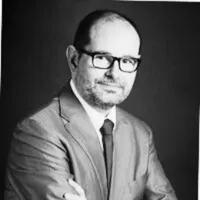
MARIO SORRIBAS, BUSINESS STORYTELLING AND PERSUASIVE COMMUNICATION CONSULTANT AND TRAINER
Founder and Head Storyteller at Storytelling&Co., specialised in the strategic use of corporate narratives as a communication tool. For more than 10 years, he has worked with companies, organisations, and institutions helping them build authentic and emotional stories that connect with their audiences. He is also part of the Red de Consultores Totales, where he promotes the creation of purpose-driven, human, and collaborative businesses capable of generating value and a sense of belonging.
You will explore the principles of Design Thinking through a new perspective on collaborative design that places the user at the centre and rethinks and adapts traditional design processes. You will acquire the tools needed to develop new methodologies in creative and entrepreneurial processes, using the latest techniques such as Manual Thinking, SCAMPER and lateral thinking.
Faculty
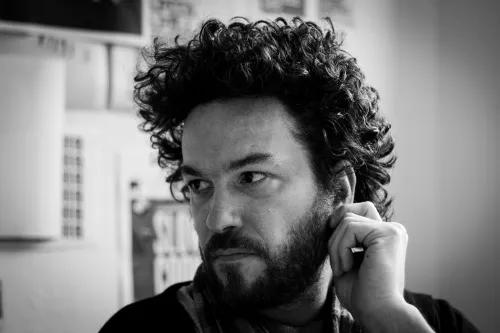
BORJA MARTÍNEZ, CREATIVE DIRECTOR
Specialist in innovation methodologies, collaborative processes and user-centred design. Throughout his career, he has worked on projects connected to creativity, entrepreneurship and strategic thinking, helping teams and organisations develop innovative solutions through design methodologies and creative problem-solving tools.
Students will be asked to develop a project that allows them to apply the greatest possible number of skills and knowledge acquired throughout the Master’s programme. The final number of students will determine the format and theme of the project, ensuring that it becomes a useful and inspiring tool for both students and faculty.

Integrating artificial intelligence into professional practice
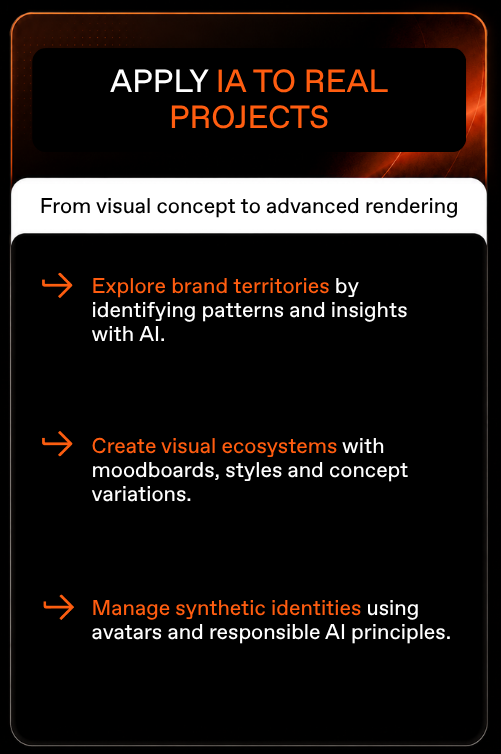
Creative Guarantee
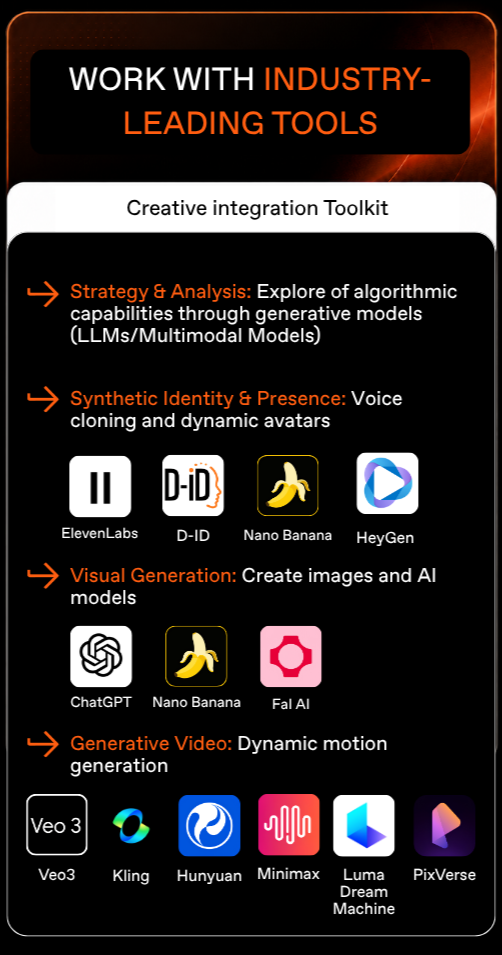
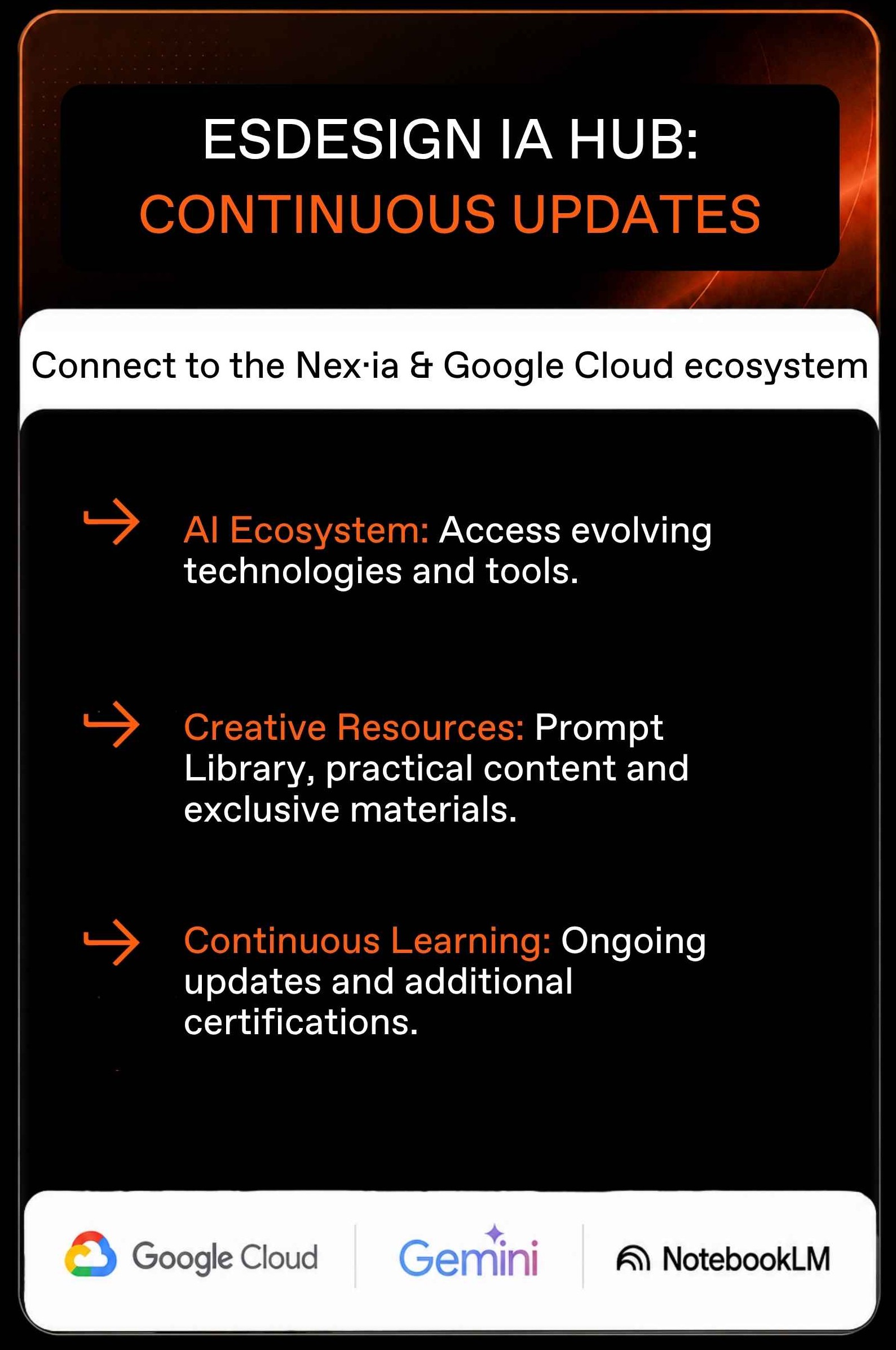
Integrate Artifitional Intelligence into yout design process while maintaining your judgment, authorship and creative vision. Learn to manage technology thtat amplifies your talent.
Tools












Professional Certifications
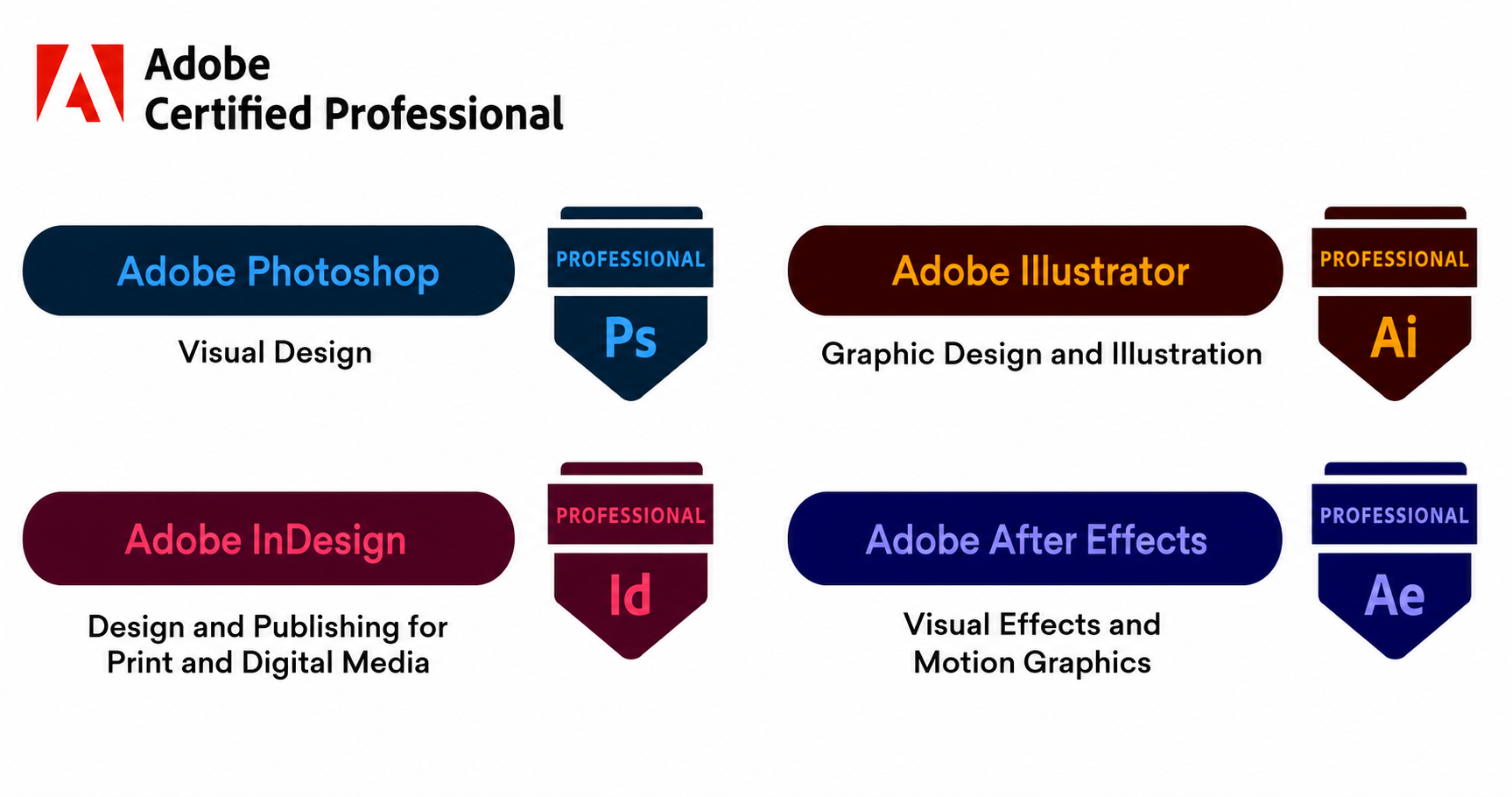
During the master’s degree, you will be able to obtain certification as an expert in the different Adobe Creative Cloud software programmes through Adobe Certified Professional, a recognised certification within the design industry that demonstrates proficiency in Creative Cloud software and the fundamental knowledge required for careers in digital media.
Who is the Master’s in Branding and Creative Communication for?
Our Master’s in Branding and Creative Brand Communication is aimed at students who want to develop their creativity and brand strategy for specific markets.
The study program at our higher education school will allow you to integrate technology into the dialogue between consumers and brands.
Our approach to branding education understands creativity as a skill rather than a specialization. Students of the advertising design and brand communication program will be able to identify trends, understand marketing concepts and language, and master social media.
Graduates of the lifelong learning program in Branding, Creativity and Brand Communication at ESDESIGN are professionals capable of generating a positive impact for brands, effectively communicating their identity through strategic brand development.
Entry Profile
The Master’s in Branding, Creativity and Brand Communication is aimed at individuals interested in advertising and brand communication, or those who wish to update their knowledge in digital environments and new consumer behaviors. The typical student profile includes:
- Graduates in Design, Communication, Advertising, Audiovisual Communication, or Marketing
- Professionals with proven experience in design, advertising, or corporate communication departments
- Creative directors and strategic planners
- Professional experience: 2–3 years
- International background
Career opportunities of the Master’s in Branding and Creative Brand Communication
Our Master’s in Branding and Creative Brand Communication has helped our ESDESIGNERS boost their professional careers:
- 47% of our students have improved their professional position.
- 53% of our ESDESIGNERS have strengthened their knowledge.
- 55% have developed new projects, products, lines of action and/or strategies.
- 37% have improved their salary.
Thanks to our programme, students learn to use creativity as a tool to build brand storytelling, shape visual identity and create lasting emotional connections. This allows them to develop professionally in:
- Creative departments in advertising agencies
- Marketing and communication departments in large companies
- Graphic design and corporate branding studios, media agencies
- Strategic planning departments in agencies or advertisers
- Account management departments in advertising agencies
- Freelance professionals, entrepreneurs, startups and new businesses
- Branding and packaging agencies
- Companies managing brands and products
Degree
Upon successful completion of the programme and after completing the required administrative procedures, you will receive the ESDESIGN Master’s Degree. In addition, you will have the possibility of obtaining a Professional Master’s Degree from the Universidad Internacional de Valencia, provided that you meet the academic, documentation, payment and administrative requirements established by the institution.
To obtain this qualification, you must hold a prior university degree (Bachelor’s Degree, Engineering Degree or equivalent). In exceptional cases, if you do not hold such a degree but can demonstrate relevant professional experience in the field and have successfully passed the Master’s assessments, you will be awarded a Certificate from the Universidad Internacional de Valencia (VIU).



"It has been an incredible experience. The tutors are top professionals and the content is very up-to-date. The flexibility has allowed me to manage my own time."
★★★★★"A fantastic school. The methodology is practical and the projects are fully connected to professional reality. I have learned a huge amount during this time."
★★★★★"Highly recommended for anyone looking to specialise in design while working. The virtual campus works brilliantly and the support is excellent."
Admissions Process
- Request information: complete the Master’s enquiry form.
- Guidance: the admissions team will advise you to ensure the programme is the right fit for your profile.
- Documentation: submit the required documents for admission, including your CV, portfolio and a copy of your university degree.
- Evaluation: the admissions committee will assess your professional profile.
- Admission: you will be informed of the committee’s decision, whether positive or negative.
- Place reservation: start your journey as an ESDESIGNER.
FAQs
While branding defines who the brand is, communication determines how it relates to society and the market.
Branding is the strategic definition phase where identity and purpose are built—a concept you will develop in the module Soul Brands: Brands with Soul. On the other hand, brand communication is the execution of that purpose through narratives and channels, which you will work on specifically in the subject Social Media: Community, Influence, and Cultural Participation.
Yes, this content is delivered through the modules Social Media: Community, Influence, and Cultural Participation and Marketing in a Digital World. You will train to speak the language of the internet, learn how to manage a brand's social media, and use technology to truly connect with people.
Yes, it is a central pillar developed in the subject Branded Content: Narrative, Entertainment, and the Brand as Media. In this module, you will gain proficiency in developing transmedia storytelling strategies that compete for the attention of today's consumers, producing original narratives that foster long-term loyalty and engagement.
No. The programme levels out the technical knowledge of all students through the Adobe Open Classroom, allowing business profiles (Business Management, Marketing, or Communication) and creative profiles to work at the same level. What is fundamental is strategic capacity and a commitment to creative problem-solving; we take care of providing the necessary technical training.
The programme merges both disciplines under a strategic creativity approach, as presented in Creativity: The Skill that Makes the Difference. In this Master’s, you will learn to use the creative mind to generate innovative solutions while applying strategic vision in Everything Communicates, Everything Builds the Brand, ensuring that design transcends its visual layer and becomes a tool for business and service design.