



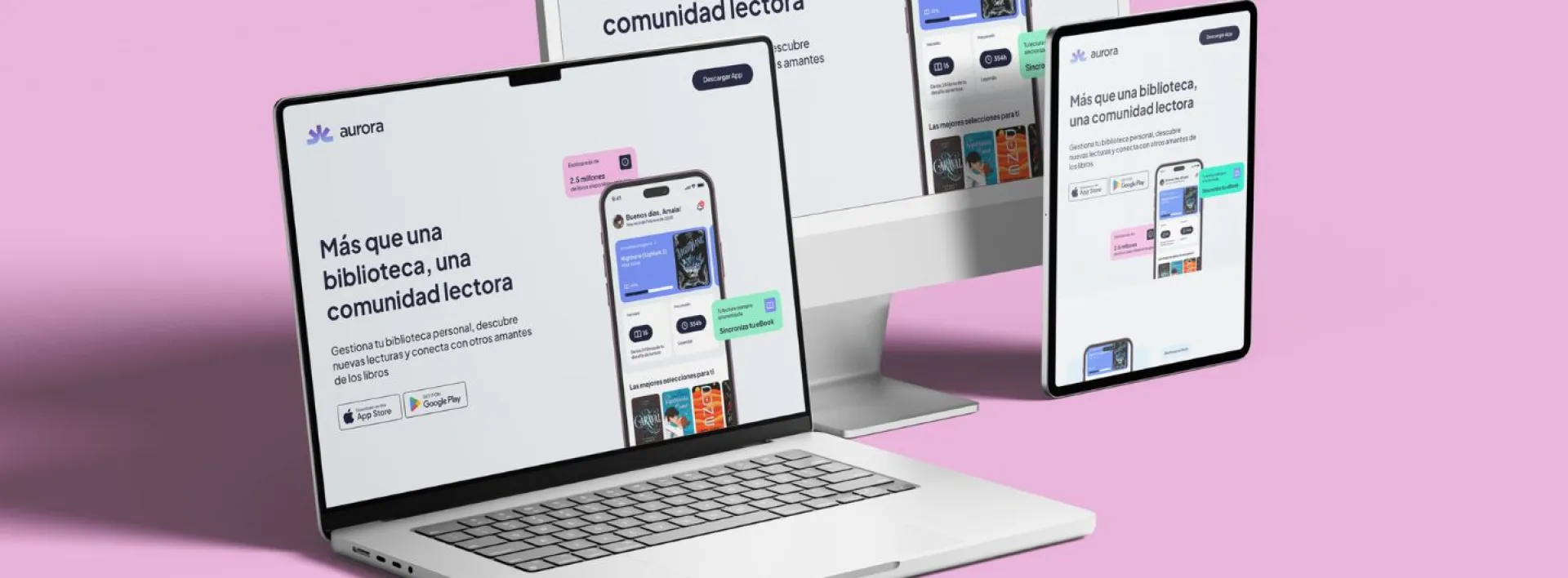
Master’s in Web and App Design: UX/UI
- April 2027
- 100% online
- Spanish
- 6.400€
- 12 months
- 60 ECTS
How do you design for a user who is constantly switching between screens and contexts? The Professional Master’s Degree in Web and App Design: UX/UI at ESDESIGN is an online programme specialising in the intersection of business strategy, user psychology and technical architecture. The goal is clear: to stop designing pages and start building digital products that guarantee Product-Market Fit.
Technical Specialisation Pillars
To stand out in the tech industry, the programme is structured into four dimensions of practical learning:
- Architecture and Systems (UI): From expert use of Figma to the creation of scalable Design Systems for desktop, apps, smartwatches and touchscreens.
- Psychology and Conversion (UX): Mastery of the Customer Journey in e-commerce, information architecture and usability techniques to optimise retention.
- Interaction Engineering: Implementation of Frontend fundamentals (HTML/CSS) under a Mobile First philosophy and adaptive design (Responsive Design).
- Future and Innovation: Integration of generative AI into the creative workflow and design for immersive environments (AR/VR/MR).
Accreditation and Professional Validation
This Professional Master’s Degree does not only award a degree; it validates your skills under global industry standards:
- CPUX Certification: Preparation to obtain the Certified Professional for Usability and User Experience title, the international standard of the UXQB.
- Professional Licence: Full access to Adobe Creative Cloud throughout the entire training period.
- Executive TFM: Development of a high-fidelity prototype validated by a panel of digital product experts.
Career Projection
The programme is designed for profiles aspiring to decision-making roles in the digital sector: Product Designer, UX Researcher, Interaction Designer or Multi-platform Project Manager.
"Current and future web design demand professionals capable of combining business vision, user experience (UX), technology, and user interface design (UI), creating visually appealing and highly functional websites. A successful design is one that effectively balances commercial objectives with an optimised user experience, enabling us to deliver optimal solutions to our clients."
Why study the Professional Master’s Degree in Web and App Design?
Integration of web architecture, usability, and strategy in the creation of wireframes, as part of the comprehensive management of multiplatform projects.
Additional training workshops and masterclasses included: Front-end Development, Creativity, UX Writing / Content...
Software learning environment included, with personalised guidance tailored to your level: InDesign, Illustrator, Photoshop, and Lightroom.
Imagen
Includes licences for Figma, InVision, Framer, and Proto.io
Imagen
Why study at ESDESIGN?
Our exclusive Welcome Plan brings together disciplines, offering a range of workshops and Adobe open classrooms specifically designed for each level, helping you integrate and strengthen your professional network from day one.
Students whose work achieves the highest grades upon completion will be selected to receive mentoring, scholarships, and to present their projects in prestigious competitions.
Guided learning, mentoring and continuous feedback provided by industry professionals who help develop your talent.
Connect with our community, take part in key industry events, and engage in activities and challenges.
Study Plan of the Professional Master’s Degree in Web and App Design: UX/UI
The Master’s in Web and App Design: UX/UI is composed of 9 modules, 1 Open Classroom, 5 masterclasses, 2 cross disciplinary workshops and the Final Master’s Project.
You will explore current screen design tools, understanding their features, uses, and advantages compared to those of the past. You will learn how Figma works and why it has become the standard for collaborative design. In addition, you will develop your first digital project to explore the software’s potential and understand how to apply its functionalities at each stage of the UX/UI process.
Faculty

JAVIER JIMÉNEZ, PRODUCT & VISUAL DESIGNER
He has over 10 years of immersion in the design field and 6 years of experience working in companies and studios. He has gained first-hand knowledge of processes, materials, and requirements to ensure that a design performs effectively and looks great both on screen and in print. He is currently developing his career at HANZO, collaborating on projects for clients such as BBVA, Mapfre, Telefónica, and Scalpers, among others.
To design effectively, you will learn to master the key elements of digital interaction, from usage patterns to the principles of colour, typography, and multimedia interfaces. You will understand how the dynamics of each format (image, video, VR, or AR) work and how to apply them coherently. With these Interface Design fundamentals, you will be able to approach any digital project with confidence and solid judgement.
Faculty

SALVADOR HUERTAS, GRAPHIC DESIGNER
Specialist in editorial design, both print and digital. He has been part of studios such as Grafica Martín Gutiérrez and Summa.
You will gain an in-depth understanding of user experience and the factors that define it, enabling you to create services and interfaces that truly respond to users’ expectations and project objectives. You will become familiar with the disciplines that shape UX (usability, information architecture, interaction design, and prototyping) and learn how to integrate them coherently into your digital solutions.
Faculty

JUDIT SALVADÓ, PRODUCT DESIGNER
Senior Product Designer with over 7 years of experience, specialising in end-to-end experiences and Design Systems. She has frequently worked as a UX Team of One and currently designs digital products at Pocketworks, while also sharing her expertise as a lecturer at various institutions.
You will apply the fundamentals of UI and UX through small projects adapted to different platforms. You will understand how to organise content and how graphical elements relate to each other depending on device size, assimilating the specific characteristics of digital design in each case. Based on a single concept, you will develop a system capable of functioning across four formats: smartwatch, desktop, touchscreen, and app.
Faculty

MARTA BOSQUET, DESIGNER & ART DIRECTOR AT AGO2 COMUNICACIÓN AUDIOVISUAL
Specialised in graphic design and UX/UI under agile methodologies, she has worked for clients such as National Geographic, Amgen, Universitat de Girona, Boehringer Ingelheim, GAES, Europastry, and Eukanuba, among others.
You will delve into advanced prototyping to transform ideas into interactive experiences, moving from basic wireframes to high-fidelity simulations that enable the validation and optimisation of digital products before development. You will explore methodologies, techniques, and tools that enhance design precision, and become familiar with AI solutions capable of accelerating tasks, generating creative variations, and analysing interactions.
Faculty

JOFRE MAÑÉ, GRAPHIC DESIGNER AT MANEKO
Graphic designer at Maneko, where he develops editorial design, corporate identity, and web design projects for clients such as Santander Universidades, Teatre del Liceu, BDO, and Laboratorios Viñas, among others. Specialised in typography, branding, and user experience, he combines creativity and technical expertise to deliver effective visual solutions.
You will focus on shaping the visual dimension of your digital projects, working on usability, functionality, and aesthetics to align with user expectations. You will reinforce key concepts related to graphical elements and learn how to combine and organise them effectively to build coherent interfaces adapted to any multimedia project.
Faculty

JORGE WIMES, FOUNDER AND CREATIVE DIRECTOR AT MANEKO
Graphic designer and UX/UI specialist with over 16 years of experience in interactive and digital projects. He has witnessed the evolution of digital media across leading companies.
You will develop both judgement and practical skills in responsive design, understanding how to adapt a web project across different devices and which content should be displayed in each case. You will explore its possibilities and graphic requirements, as well as the necessary software tools. Finally, you will create and implement (at mockup level) multiplatform web solutions, paying particular attention to code-related aspects (such as Bootstrap) that influence design across multiple devices.
Faculty

JOSEP ORTEGA CASCANTE, FOUNDER AND CREATIVE DIRECTOR AT KINGS OF MAMBO
He founded Kings of Mambo, a digital creative studio established in 2004, whose main clients include Grupo Godó, RBA, Vueling, InfoJobs, SEAT, and Custo Barcelona, among many others. He has participated as a speaker at events such as OFF Barcelona, Adobe sessions at Graphispak, and as a jury member for the Laus Awards 2010.
You will learn the key principles to attract, acquire, and retain users in an e-commerce environment. You will analyse user behaviour and map the customer journey to identify opportunities. You will apply usability and human-centred design principles to improve each stage of the journey. The goal is to create seamless experiences that drive conversion and strengthen the relationship with the brand.
Faculty
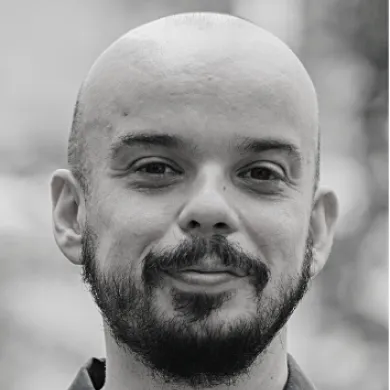
ALFONS PICH, STRATEGIC CONSULTANT AND FOUNDER OF LIFE IN THE WOODS
With over 15 years of experience developing communication, marketing, and public relations strategies, grounded in the importance of storytelling, the creation of culturally interconnected content, and the creative — not merely cosmetic — use of technology for projects worldwide. His area of expertise spans the technology, cultural, and education sectors, as well as brand identity development for companies, startups, and public, private, and non-profit projects. Alfons has led Spanish-speaking markets for a well-known social network with over 500 million users, worked on global projects for public relations agencies in London, and served for six years as a communication consultant for the ITU, the United Nations agency for ICT, developing projects across Asia, Africa, and Europe.
You will explore how emerging technologies are transforming digital interaction, from conversational interfaces and voice assistants to immersive realities (AR/VR/MR). You will analyse the role of generative artificial intelligence and multisensory experiences. You will develop a critical perspective to understand how these innovations redefine the relationship between users, products, and services. The goal is to prepare you to design solutions that anticipate the future of the industry.
Faculty

JOAN BARÓ, GRAPHIC DESIGNER
Graphic designer specialised in communication strategy development. Freelance for clients such as Santander Universidades, Buff, Nespresso, Institució Cultural del CIC, and Panrico.
A learning space focused on Adobe Creative Cloud software, where you will work with InDesign, Illustrator, Photoshop and Lightroom. You will have access to resources and exercises structured across three levels of difficulty: beginner, intermediate and advanced. You will be supported by a professional lecturer specialised in these tools. The course runs for 6 weeks, alongside the introductory workshop and the first module.
Faculty

QUIQUE LÓPEZ, STRATEGIC CREATIVE DIRECTOR
After working at several design studios and agencies, he founded Pino in 2016, a design studio that has collaborated with leading brands including Burger King UK, Burger King ROI, Wyndham Hotels, Port de Barcelona, Cauchos Karey, and Albert and Ferran Adrià.
The studio has also worked with Equilibrium and Actahotels; restaurants such as Granja Elena, Almarge and Grupo Capet; and educational institutions including Esade and Aurea.
AI does not remove the need for tokens, accessibility rules or software architectures; it turns them into the structured context that allows algorithms to generate consistent, accessible, production-ready interfaces in record time.
In this masterclass we break down the methodology for building design systems ready for the synthetic era (AI-ready Design Systems) and the convergence between design and web development.
Faculty

ANA VICTORIA VERA MARTÍNEZ, PRODUCT DESIGNER AND EXPERIENCE STRATEGY LEADER
Professional specializing in digital product design, experience strategy and the development of user-centered solutions. Her profile combines strategic vision, interface design and an understanding of digital systems to drive functional, coherent and innovative experiences.
In this masterclass we examine the methodology for conceptualizing, building and scaling digital products, relying on modular architectures, No-Code/Low-Code tools, API integrations and automation assisted by Artificial Intelligence.
Faculty

PATRICIO FERNÁNDEZ, PERSONAL BRAND DEVELOPMENT CONSULTANT WITH A DIGITAL FOCUS
Professional specializing in digital strategy, product development and the validation of functional, business-oriented solutions. His approach combines automation, strategic vision and the building of scalable digital products.
Digital project management and the role of the contemporary Project Manager (PM) have gone beyond the mere handling of budgets, schedules and spreadsheets. At the intersection of design, technology and business strategy, the PM acts as the strategic orchestrator responsible for turning uncertainty into valuable deliverables, aligning the client's vision with the technical and creative execution of the team. In this masterclass we break down the key skills, frameworks, leadership tools and full life cycle needed to lead highly complex digital projects.
Faculty

QUICO DOMINGO, IT CONSULTANT AND PARTNER AT MORTENSEN
Partner at Mortensen, a web and app design studio in Barcelona, he contributes to the newspaper ARA, El Món and the business daily VIAempresa with articles and short technology analysis pieces.
AI does not replace human leadership, empathy with the client or strategic negotiation; it eliminates bureaucratic overload (project admin overhead), such as manually writing tickets, updating statuses or tracking metrics, so that the Project Manager or Product Owner can focus on decision-making and the value delivered.
Faculty
QUICO DOMINGO, IT CONSULTANT AND PARTNER AT MORTENSEN
Partner at Mortensen, a web and app design studio in Barcelona, he contributes to the newspaper ARA, El Món and the business daily VIAempresa with articles and short technology analysis pieces.
Combining Figma's visual architecture with the autonomous terminal execution capabilities of Claude Code (Anthropic's CLI agent) marks a milestone in product engineering: the evolution from simple assisted Design-to-Code to the autonomous orchestration of user interfaces. This masterclass covers the methodology for setting up and deploying a workflow in which an AI agent does not just "read" design layers, but inspects repositories, runs tests, updates component libraries and generates production-ready code autonomously.
Faculty
QUICO DOMINGO, IT CONSULTANT AND PARTNER AT MORTENSEN
Partner at Mortensen, a web and app design studio in Barcelona, he contributes to the newspaper ARA, El Món and the business daily VIAempresa with articles and short technology analysis pieces.
You will learn to strengthen your business mindset and transform a creative idea into a profitable and sustainable venture. You will discover the keys to turning projects into real opportunities, exploring areas such as strategic planning, resource management, market analysis, and value proposition.
Faculty
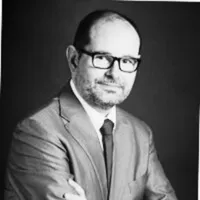
MARIO SORRIBAS, BUSINESS STORYTELLING AND PERSUASIVE COMMUNICATION CONSULTANT AND TRAINER
Founder and Head Storyteller at Storytelling&Co., specialised in the strategic use of corporate narratives as a communication tool. For more than 10 years, he has worked with companies, organisations, and institutions helping them build authentic and emotional stories that connect with their audiences. He is also part of the Red de Consultores Totales, where he promotes the creation of purpose-driven, human, and collaborative businesses capable of generating value and a sense of belonging.
You will learn the concepts of "Design Thinking", with a new perspective on collaborative design that puts the user at the center and rethinks and adapts classic design processes. You will gain the tools needed to propose new methodologies in creation and entrepreneurship processes, through the most recent creative techniques such as Manual Thinking, SCAMPER and lateral thinking.
Faculty
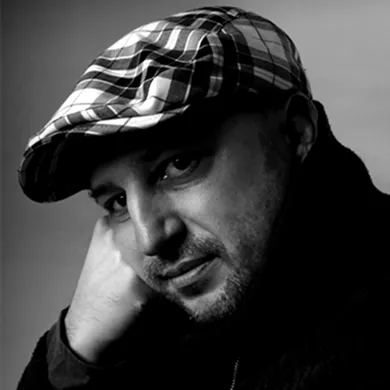
ÓSCAR GUAYABERO, CURATOR AND PARADESIGNER
He studied art and industrial design. He works in the fields of design, architecture, communication, cultural management and social activism. He writes specialized articles and books.
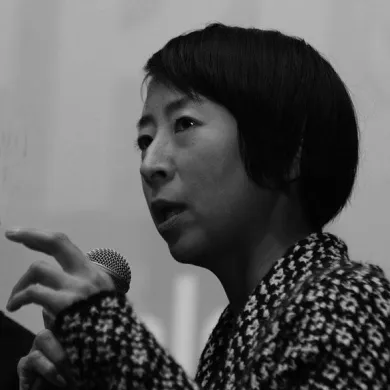
TOMOKO SAKAMOTO, CO-FOUNDER OF SPREAD
Architect, editor and designer of books on architecture and design at Actar. She has designed and coordinated several exhibitions at the RAS exhibition space and bookshop.
The Master’s Final Project (MFP) is the culmination of the programme, where you will develop a comprehensive digital product from the research phase to a high-fidelity prototype. Guided by expert tutors, you will apply UX Research and UI Design methodologies to solve a real business challenge. The project concludes with a defence before a professional panel, validating your ability to launch digital solutions that achieve Product-Market Fit.
Tools
Everything you need to design, explore, and experiment is included from day one.
Professional Certifications
During the programme, you will have the opportunity to prepare for the internationally recognised certification Certified Professional for Usability and UX (CPUX), issued by the International Usability and User Experience Qualification Board (UXQB).
A standard that validates knowledge in usability, human-centred design (HCD), and the evaluation of digital experiences.
The CPUX standard includes different levels:
- CPUX-F (Fundamentals of Human-Centred Design)
- CPUX-DS (Designing Solutions)
- CPUX-UT (Usability Testing and Evaluation)
Throughout the programme, you will benefit from a dedicated academic support plan to help you prepare for the official exams.

Who is the Professional Master’s Degree in Web and App Design: UX/UI for?
Our Professional Master’s in Web and App Design: UX/UI is aimed at individuals interested in focusing their education on the more technological and innovative side of design. The programme will allow you to explore interaction design projects across different platforms and formats, while analysing current trends and tools in web design to deliver solutions tailored to user needs. Our approach to multiplatform web design education is based on the use of different devices and environments, their applications, and the proper integration of UX/UI principles. Graduates of this programme at ESDESIGN are professionals capable of understanding the digital landscape, proposing and developing coherent digital products aligned with real-world contexts and market demands.
Entry profile
This Master's Degree is aimed at individuals interested in design, web development, content architecture, and programming, among other disciplines, who also have academic qualifications or professional experience in:
- Bachelor’s degree in Design
- Bachelor’s degree in Communication Sciences
- Degree in Telecommunications Engineering and/or Computer Science
- Bachelor’s degree in Audiovisual Communication
- Degree in Computer Science
- Degree in Programming
- Graduates from other fields who have proven professional experience in design, supported by an academic background and/or portfolio, and a strong interest in design.
Career opportunities of the Professional Master’s Degree in Web and App Design: UX/UI
Our Professional Master’s in Web & App Design: UX/UI has helped our ESDESIGNERS advance their professional careers:
- 60% of our students have improved their professional level.
- 57% of our ESDESIGNERS have strengthened their knowledge and skills.
- 67% have achieved a job promotion.
- 43% have increased their salary.
Thanks to the programme, they have transformed business ideas into real, innovative digital projects. This has enabled them to develop professionally in roles such as:
- UX/UI Director
- User Experience (UX) Designer
- Multiplatform Project Manager
- Front-end Developer
- App Designer
- Freelance Professional
Degree
Upon successful completion of the programme and after completing the required administrative procedures, you will receive the ESDESIGN Master’s Degree. In addition, you will have the possibility of obtaining a Professional Master’s Degree from the Universidad Internacional de Valencia, provided that you meet the academic, documentation, payment and administrative requirements established by the institution.
To obtain this qualification, you must hold a prior university degree (Bachelor’s Degree, Engineering Degree or equivalent). In exceptional cases, if you do not hold such a degree but can demonstrate relevant professional experience in the field and have successfully passed the Master’s assessments, you will be awarded a Certificate from the Universidad Internacional de Valencia (VIU).



"An amazing experience. ESDESIGN’s online methodology has allowed me to balance my work with top-tier training."
★★★★★"Active tutors who understand design for the real world. The projects are demanding and highly rewarding."
★★★★★"Brilliant methodology"
"The way the modules are structured and the personalised attention from the tutors makes an absolute difference compared to other centres."
Admissions Process
- Request information: complete the Master’s enquiry form.
- Guidance: the admissions team will advise you to ensure the programme is the right fit for your profile.
- Documentation: submit the required documents for admission, including your CV, portfolio and a copy of your university degree.
- Evaluation: the admissions committee will assess your professional profile.
- Admission: you will be informed of the committee’s decision, whether positive or negative.
- Place reservation: start your journey as an ESDESIGNER.
FAQs
The projects you will undertake during the Master’s programme span a wide range of web design disciplines. For example, you will develop your first digital project in Figma, the collaborative digital design tool, and create a system capable of functioning across four formats (smartwatch, desktop, touchscreen and app) in the module UI: Design Systems. In the module UX: E-commerce and Customer Journey, you will design a seamless purchasing experience, while in UI: Responsive Design vs Smartphone App you will create cross-platform web solutions using mock-ups. Finally, for your Master’s Final Project, you will develop a comprehensive digital product, from initial research through to a high-fidelity prototype.
This distinction is explored in a technical manner in the modules UX: User Experience and UI: Fundamentals of Interaction Design. UX is defined as the discipline that brings together usability and information architecture to meet users’ expectations, whereas UI focuses on mastering usage patterns, colour, typography and multimedia interfaces to shape both the visual and functional aspects of projects.
Yes, you will learn how to transform basic wireframes into high-fidelity simulations in the module Advanced Prototyping and AI Tools. This process will enable you to validate and optimise digital products before development, using methodologies and techniques that enhance the accuracy of interactive design.
Yes, research is a core component of the programme. It is covered in the module UX: User Experience, where the factors that shape interaction are defined, and further developed in the workshop From Concept to Reality: UX Keys to Achieving Product–Market Fit.
In this workshop, you will learn how to identify problems, explore opportunities and validate solutions using UX methods, ensuring that your proposal aligns with user needs.
Advanced experience is not essential, as the programme includes the Adobe Open Classroom, where you can refine your software skills, and the Frontend Development Workshop, where you will learn the fundamentals of HTML and CSS from scratch.
These learning environments are designed to enable participants from a wide range of backgrounds to acquire the technical skills needed to design realistic and professional interfaces.
You will use Figma as the standard software in the Figma module, a collaborative digital design tool, as well as the Adobe Creative Cloud suite through the Adobe Open Classroom.
You will also work with generative AI tools (Adobe Firefly) for creating graphic assets, and specific AI solutions for interaction analysis in the module Advanced Prototyping and AI Tools. In addition, you will use HTML and CSS in the Frontend Development Workshop.
The programme is geared towards a designer and project management profile, as reflected in modules such as Interface Design and Project and Business Management.
Although the Frontend Development Workshop teaches how to structure and style interfaces, the aim is for students to be able to lead the creation of digital products from a strategic and visual design perspective, rather than focusing on in-depth programming.