


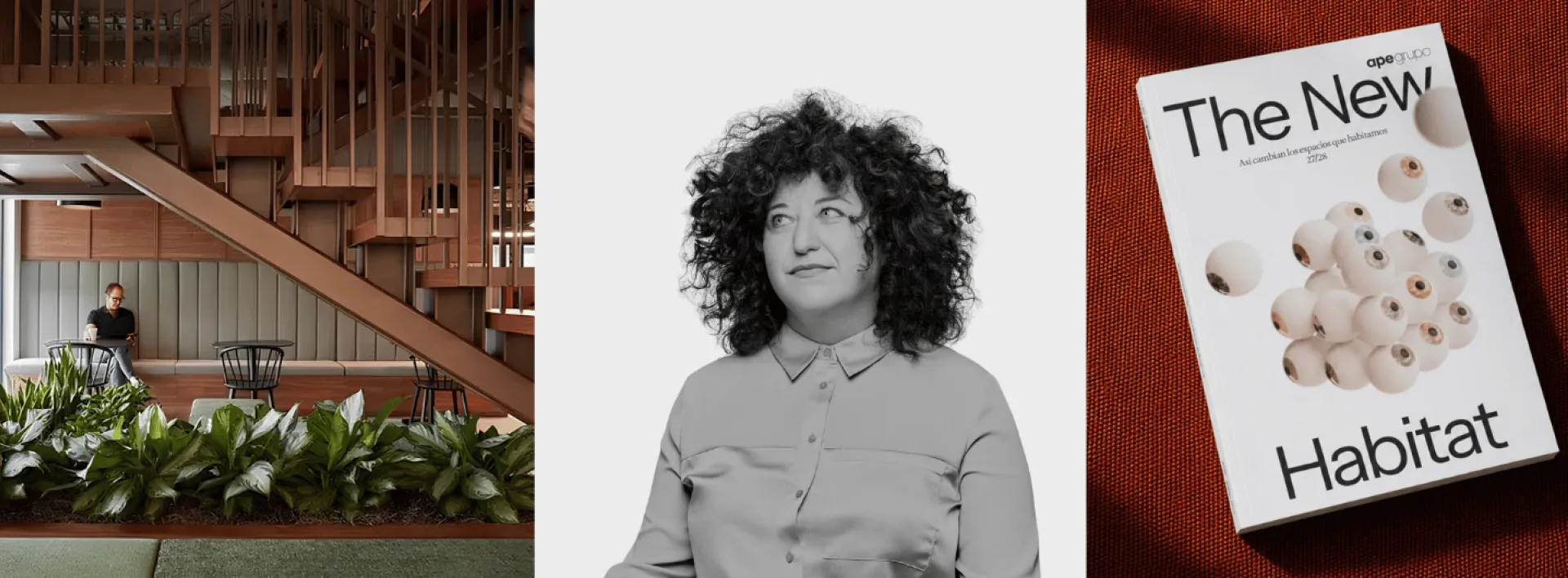
Pepa Casado, lecturer at ESDESIGN, contributes to the development and presentation of The New Habitat 27/28 report
Pepa Casado D’Amato, lecturer on the Master’s in Interior Design at ESDESIGN, Higher School of Design of Barcelona, part of Planeta Formación y Universidades, has contributed to the development and presentation of The New Habitat 27/28, the sixth edition of the annual report on design and architecture trends promoted by APE Grupo and produced in collaboration with Futurea, a trends consultancy she co-founded.
On 5 November, the lecturer presented the report’s key findings at an event held at the European University of Valencia as part of València Design Fest. During the event, architect Ramón Esteve demonstrated how some of the trends identified in the study are being translated into real-world projects.
The New Habitat 27/28 explores how homes, hotels, offices and retail spaces are evolving, drawing on international research and a survey of 352 industry professionals in Spain. Among its key findings, the rapid adoption of artificial intelligence in design stands out: seven in ten professionals already use these tools, while only one in six projects measures its environmental impact using verifiable systems.
The report also identifies emerging priorities across the four areas analysed. In residential spaces, health, the use of healthy materials and new ways of living together are becoming increasingly important. Hotels are evolving towards shared wellbeing experiences and a stronger connection with nature. Offices are seeking to enhance the working experience through more flexible and accessible spaces, while physical retail spaces are strengthening their role as places for meeting, interaction and brand engagement. The research has also been presented at international industry events in cities including Dubai and Paris.
The study’s findings highlight the need to move towards a form of design that, beyond aesthetics and functionality, takes into account the impact of spaces on people's health and wellbeing, as well as on the environment.
Pepa Casado D’Amato’s work reflects ESDESIGN’s connection with the changes transforming design and architecture, as well as its commitment to bringing the trends and challenges that will shape the future of the spaces we inhabit closer to its educational community.
