



FESesDESIGN 2026 transforms Barcelona into a stage for creativity, design and industry connections
Barcelona once again became a meeting point for design with the opening of FESesDESIGN 2026, ESDESIGN’s festival that, over two days, brings together students, professionals, alumni and creative minds to explore new ways of thinking about, experimenting with and experiencing design.
The first day of the festival, held on 12 June, was defined by an experiential programme that encouraged participants to step outside the classroom and learn through hands-on practice, experimentation and direct contact with the industry. Through four intensive workshops and three creative tours across Barcelona, attendees explored different design disciplines alongside active professionals and leading figures in the sector. With l’Antiga Fàbrica Estrella Damm as its main hub, FESesDESIGN transformed different locations across the city into learning environments where creativity, strategy, innovation and critical thinking came together from a wide range of perspectives.
Throughout the day, the workshops encouraged participants to tackle real challenges, apply professional methodologies and explore new approaches to contemporary creation. In The AI Design Challenge: From Research to Audiovisual Production, led by Jordi Blanch, attendees explored the potential of artificial intelligence applied to graphic and audiovisual design, developing creative concepts using text, image, video and audio generation tools.
Meanwhile, the workshop From Production to Regeneration: Fashion and Biomaterials, led by Blanca Aizpurúa, offered a more experimental and sensory approach to fashion design, inviting participants to rethink creative processes through biomaterials and regenerative practices.
Design as a tool for social transformation also played a central role in Visual Peace Lab: Design for Dialogue, developed together with the Bold team, featuring Alejandro Magro and Oliver Montiel, where participants explored the power of visual language to reduce symbolic violence. Through socially impactful graphic proposals, they investigated new ways of fostering dialogue.
At the same time, the ARCOS Global Flagship Sprint workshop, led by Pepe García and Miguel Cánovas from Culdesac Studio, immersed attendees in the real dynamics of retail design and brand strategy, challenging them to conceptualise new experiences related to commercial space design.
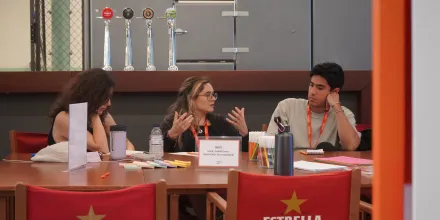


Beyond the workshops, FESesDESIGN also took to the streets of Barcelona through its ESDESIGN Tours, immersive experiences designed to discover design from the inside. The Brand Tour, led by Joan Cascante, gave participants the opportunity to explore the branding ecosystem and gain first-hand insight into the work of leading brand-building studios and agencies such as Ogilvy, Folch and Firma. Meanwhile, the Design Tour, guided by Quique López, introduced attendees to leading studios such as Summa, Comuniza and Atipus, showcasing their methodologies, creative processes and real-world projects from Barcelona’s design scene.
The city itself also became a source of inspiration through the Trends Tour, led by Mireia G. Lara. This journey through concept stores, creative spaces, retail environments, innovative materials and emerging trends reflected the current pulse of design in Barcelona. Throughout the day, participants discovered new ways of understanding contemporary creativity and connected with projects that bring together design, culture and experience. Among the highlights of the tour was a visit to the exhibition The Cult of Beauty at the CCCB, an exhibition exploring the evolution of beauty standards throughout history and the role of design and the beauty industry in shaping cultural narratives, including references to products linked to the sector in Catalonia.
One of the most significant moments of the day came with the final presentation of the projects developed during the workshops, where participants shared the outcomes of the challenges they had tackled throughout the day, presenting their processes, learnings and proposals born from collaboration and experimentation.
With this first day, FESesDESIGN 2026 reaffirmed its commitment to a learning model connected to professional practice, where design is understood not only as a discipline, but as a tool capable of generating experiences, fostering critical thinking and creating cultural impact.


-
Master’s in Artificial Intelligence for Creativity and Design
Artificial Intelligence -
Master’s in Retail Design & Visual Merchandising
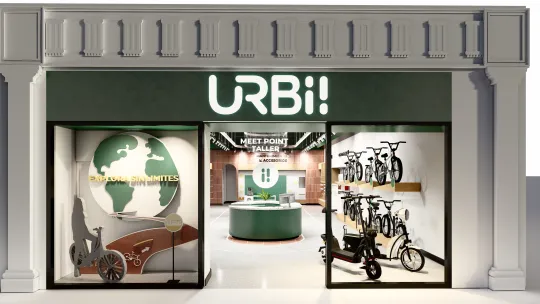
Spatial DesignDo you want to pursue a career in Visual Merchandising? With the Master in Retail Space Design, you will learn how to translate brands into physical spaces. Find out more here.
-
Master’s in Fashion Business & Brand Management
Fashion Design


